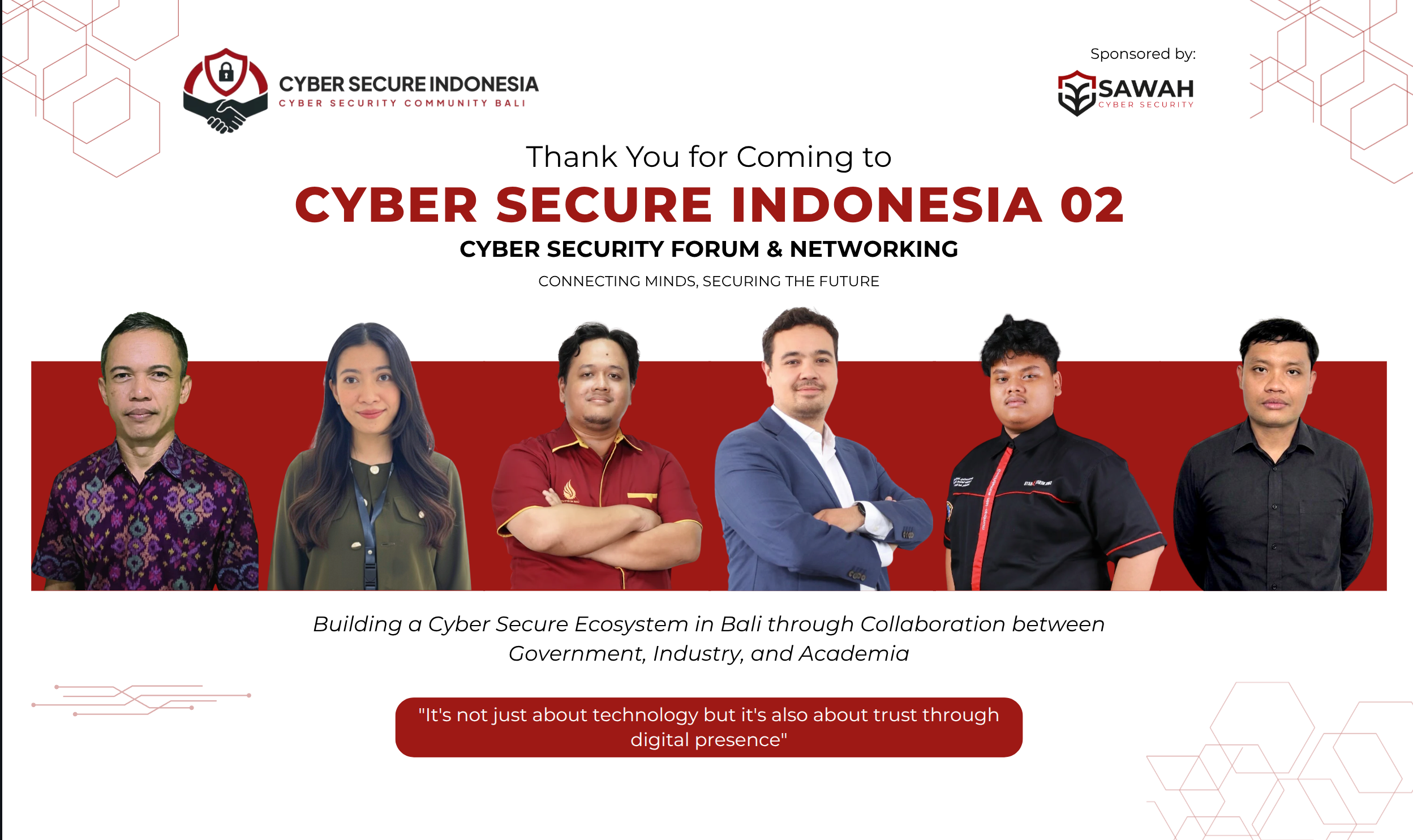
Cyber Secure Indonesia 02: Bali Cyber Security Network and Forum Event (Education, Government and Private Industry)

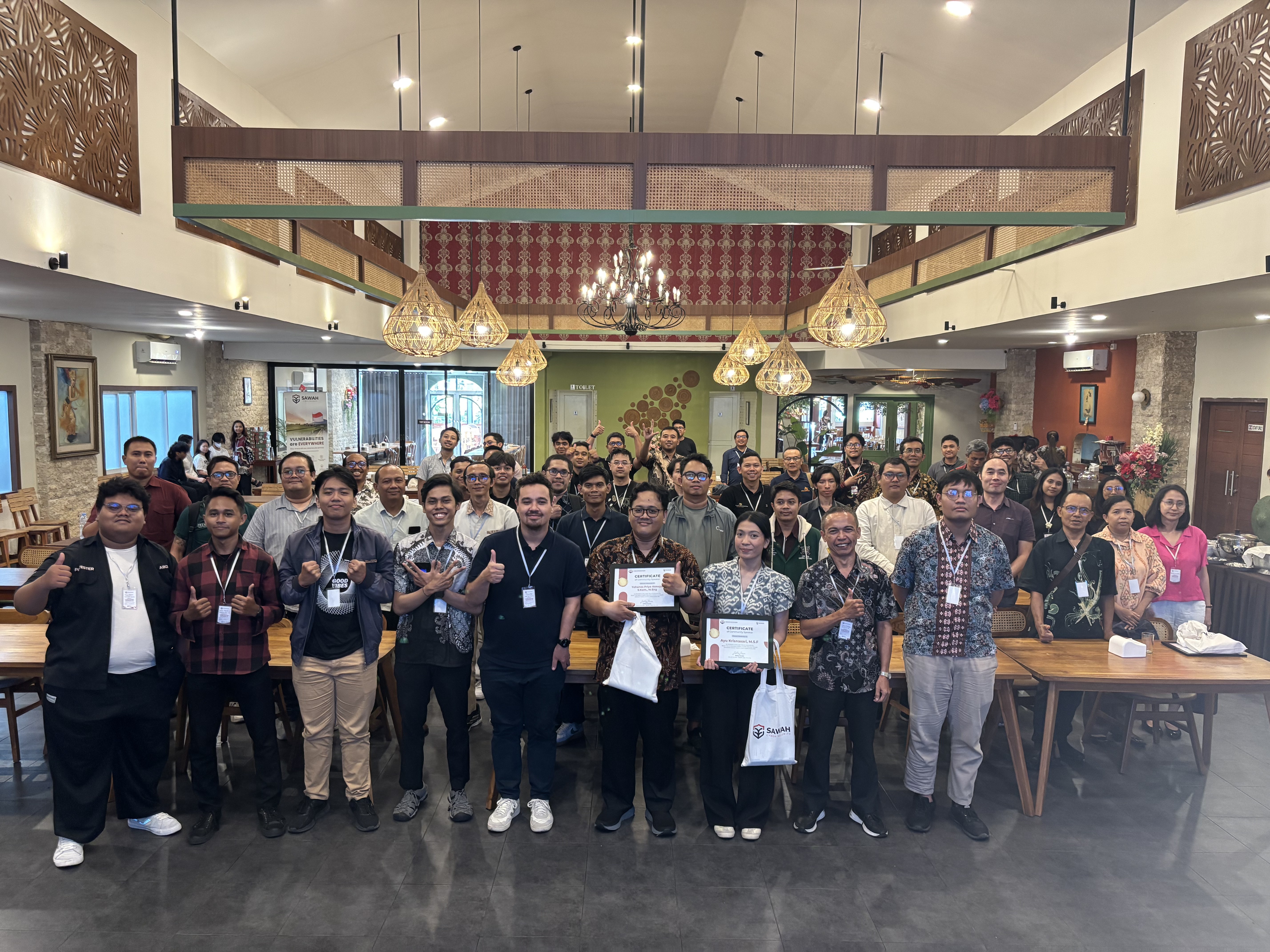
On June 5, 2026, cybersecurity professionals, government representatives, educators, students, and business owners gathered at Seribu Rempah Resto in Kuta for the Cyber Secure Indonesia 02 event, a Bali cyber security community meetup focused on sharing security insights and knowledge with the community.
This second edition of the event was initiated and sponsored by Sawah Cyber Security, which specializes in offensive and defensive security, with support from speakers who voluntarily participated in the session.
Shared insights about advanced attacks in Bali
The opening session came from the Sawah Cyber Security team — Jeffrey Jansen (CEO & Founder), Made Narayana (Cyber Security Expert), and Abdan Alkayyis (Cyber Security Expert). The session focused on how real hackers work, and how cyber security threats are actually hitting Bali businesses. It showed how attackers exploit "people" more often than they exploit code or technology.
The team walked through a real case Sawah Cyber Security experienced itself: a criminal hacker group that tried to scam the company. The method was simple but well-executed. It started with an account breach of a legitimate Google Business account belonging to an IT supplier based in Bali. The group changed the Google Business details and routed new "clients" to a fraudulent WhatsApp number.
From there, the group posed as an IT service helpdesk offering IT recommendations and sending invoices nearly indistinguishable from real ones.
This also highlighted a bigger problem seen in Bali: many companies still hesitate to accept help from cyber security companies because anything tied to "hacking" makes them nervous. That stigma remains an issue, and points to the need for more cyber security awareness and education in Indonesia.
Fortunately, Sawah Cyber Security did not become a victim, thanks to various layered controls that helped detect and prevent the scam in time. The session closed with recommendations on how companies can prevent similar attacks.
Teaching Cybersecurity to Children
Ayu Krisnasari, M.S.F (Cyber Security Education Specialist, Timedoor Academy) presented "How to Educate Children in Cybersecurity Through Innovative Games." Her argument:
"Children start using devices independently around ages seven to nine, but rarely understand the privacy and safety risks that come with them. Because most security concepts are abstract, traditional awareness training doesn't stick."
Her answer is game-based learning: simulated scenarios covering phishing, online scams, privacy, cyberbullying, and stranger interactions, where immediate feedback turns abstract ideas into habits. She closed with a call for schools, parents, government, and security professionals to share the work.
The role of higher education
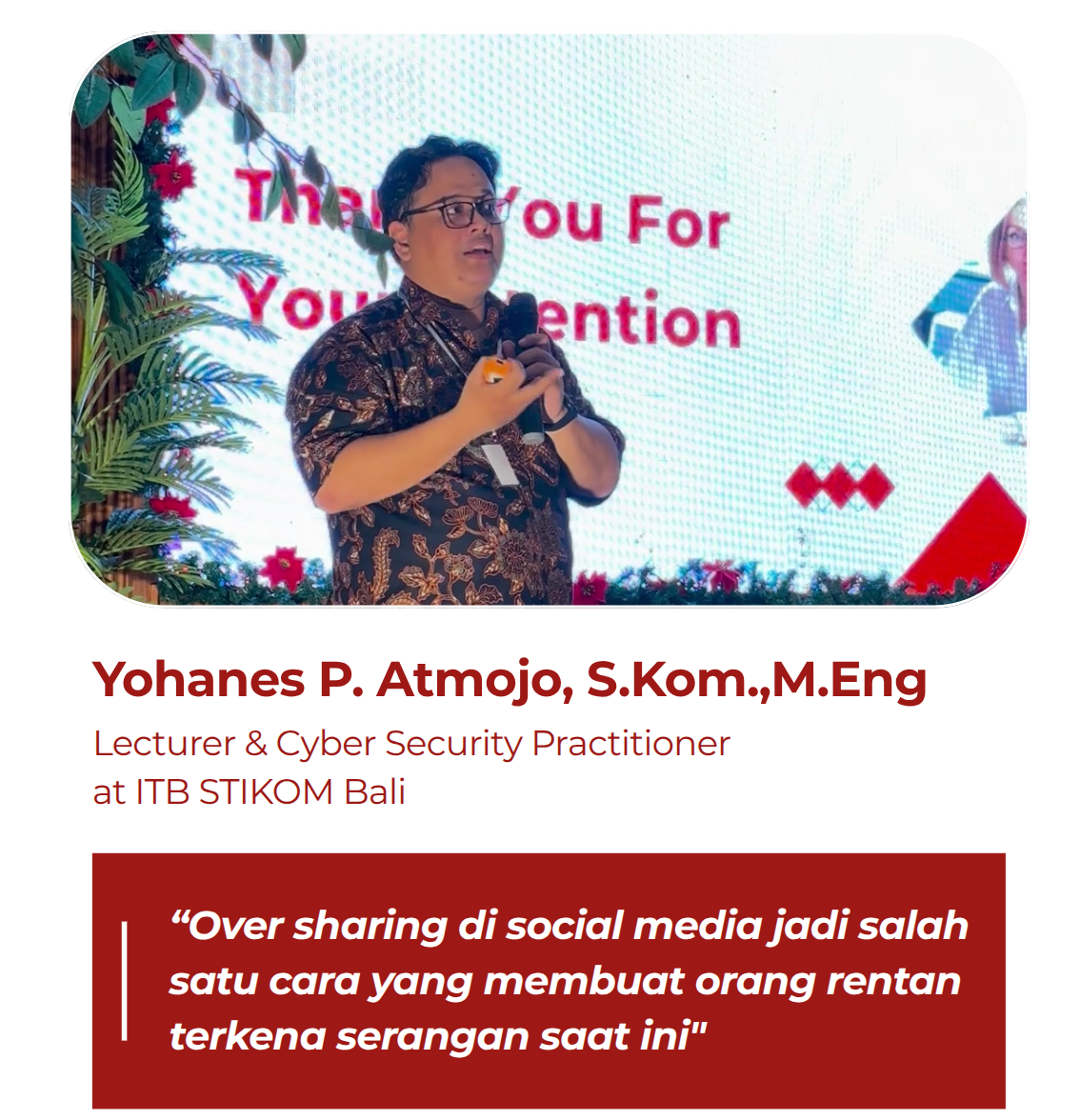
Yohanes Priyo Atmojo (Lecturer and Cyber Security Practitioner, ITB STIKOM Bali) spoke on "The Role of Higher Education in National Digital Defense." Drawing on recent incidents affecting Indonesian public services and infrastructure, he laid out where universities matter:
- Producing skilled professionals
- Conducting research
- Extending awareness beyond the classroom
- Supporting national programs with expertise and policy input
He also stressed that technical skill has to come with integrity and accountability.
Government and the triple helix
The final session was delivered by I Made Widiartha, Sandiman Ahli Madya from Diskominfo Provinsi Bali. As Bali's public services and economy move online, the attack surface grows — a trend reflected in the number of attacks Diskominfo Bali has recorded in 2026, based on the latest statistics from their security monitoring platform.
Pak Made also showed what the Bali Provincial Government has been doing, such as its Information Security Awareness program (Lentera Siber):
- Delivering cyber security awareness sessions during Civil Servant Basic Training (CPNS Latsar)
- Conducting roadshows to regional government agencies
- Hosting radio talk shows
- Running social media and marketing campaigns
- Conducting phishing simulations, APK demonstrations, and rogue hotspot simulations
He also explained the role of government in cyber resilience, and the roles of BSSN and CSIRTs in Indonesia.
His central theme was the "triple-helix" model: sustainable cyber resilience only happens when government, industry, and academia work together on policy, technology, talent, and response.
Networking
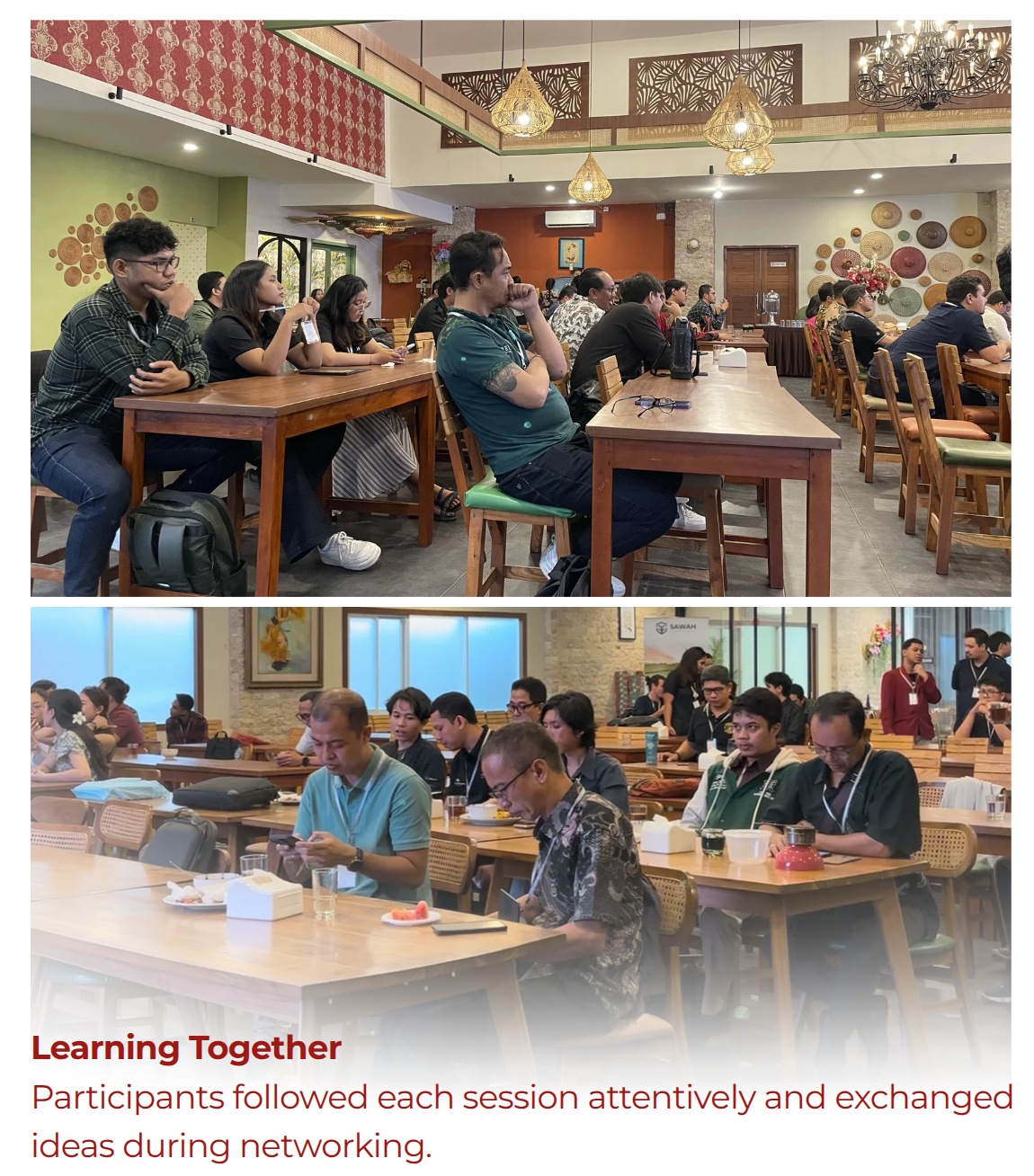
As at previous editions, the networking session was one of the most useful parts of the day — professionals, students, and business representatives comparing notes on the problems they're actually facing, and laying the groundwork for future collaboration.
The main recurring topics: security awareness, education, knowledge sharing, and cyber attacks (email phishing & account breaches).
Closing
Across four very different sessions, the message held:
"Cybersecurity is a shared responsibility, not just an IT and technology problem."
Thanks to all the speakers, attendees, and volunteers who made Cyber Secure Indonesia 02 possible.