Continuous Penetration Testing
A continuous security testing model where a team of penetration testers works alongside your development cycle, assessing new code, features and infrastructure changes as they happen — instead of running a single point-in-time engagement.
Start Continuous TestingContinuous Security Testing
Continuous Penetration Testing (CPT) is a model where a pentest runs as an ongoing service rather than a one-time engagement. A team of cyber security experts reviews your IT environment continuously — new code, features, infrastructure changes, exposed assets — and reports findings as they are discovered, instead of at the end of a fixed testing window. The goal is the same as a traditional pentest: identify vulnerabilities and weaknesses, and assess the risk they pose to the confidentiality, integrity and availability of your information and operational systems. What changes is that the assessment moves with your environment instead of standing still.
Our team reports findings directly in Sawah Cyber ONE, our client portal, giving you real-time visibility into identified vulnerabilities and weaknesses, their business impact, and remediation guidance. The portal is also where you approve the engagement scope, request additional scope items, and follow retest status as work progresses. Over time our testers learn your applications and infrastructure in depth, reaching issues a one-time pentest does not have the hours or context to find.
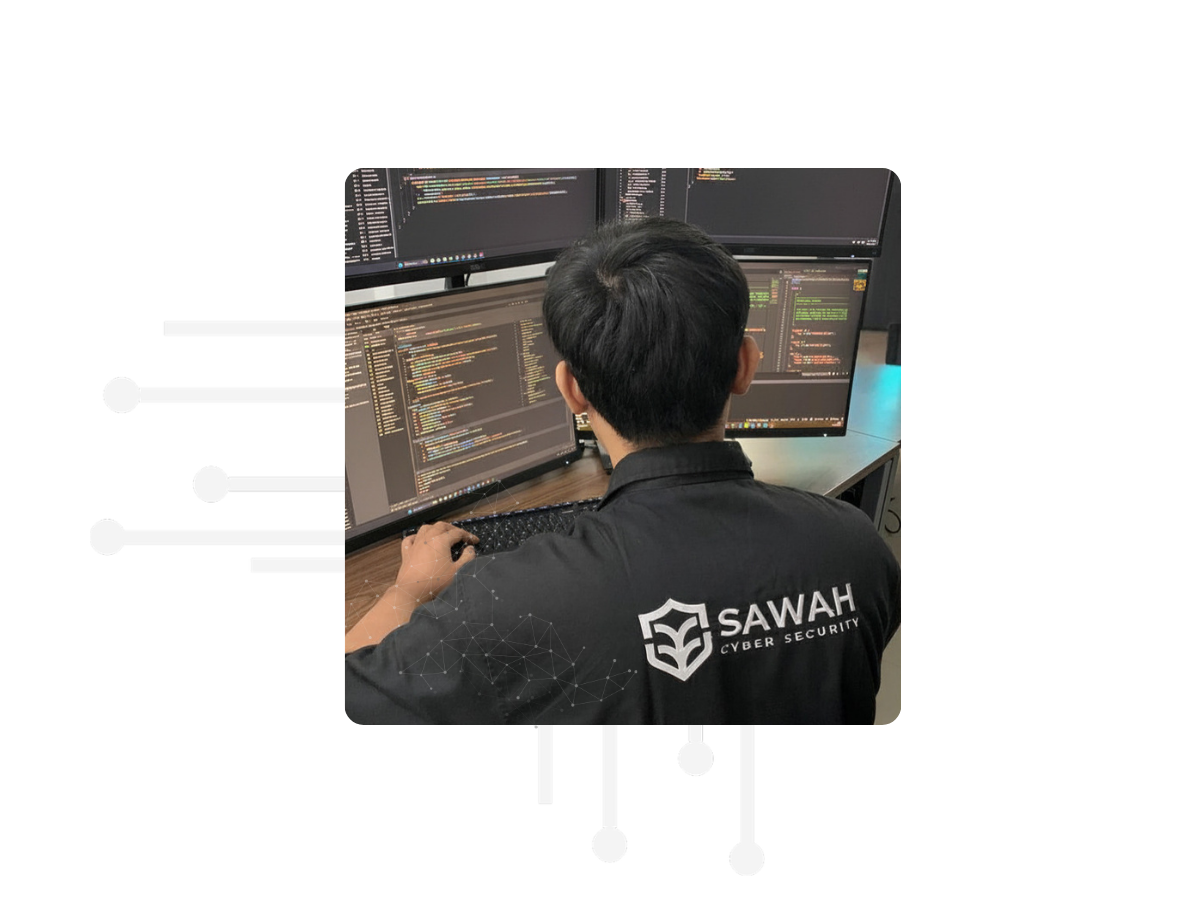
Which Test Do You Need?
Three approaches, three different goals. Here is the short version — we help you pick the right one based on your situation, needs and budget.
| What you get | Vulnerability Assessment | Penetration Testing | Continuous Pentesting |
|---|---|---|---|
| Goal | Find and prioritize known vulnerabilities. | Objective-based: simulate real attacks and exploit weaknesses. | Continuous validation and retesting, in close collaboration with your IT and cyber security team. |
| Depth | Broad scan, limited exploitation. | Deep, manual, adversary-style. | Manual and AI-assisted, throughout the SDLC cycle. |
| When | Routine checks and compliance. | Before go-live or after big changes. | Agile / fast-release environments. |
| Best for | Baseline hygiene and audit prep. | Any company with critical systems, data or operations it cannot afford to see breached. | SaaS, product teams, regulated fast movers. |
| Company profile | Any company that wants a first look at known weaknesses across its environment. | Companies with specific systems they want probed for exploitable weaknesses under realistic attack conditions. | Companies shipping often — security testing that moves at the same pace as development. |
Why customers choose Continuous Pentesting
What organisations consistently mention when they move from a yearly pentest to a continuous engagement.
Coverage that follows your sprints
Testing runs alongside your sprints and releases instead of once a year, so security keeps pace with the changes your team actually ships.
Findings in days, not quarters
New code is reviewed shortly after it ships. Issues land in the portal while the context is still fresh, instead of months later when fixing is harder and more expensive.
One place for every finding
Sawah Cyber ONE shows open issues, advisory reports, retest status and scope changes in real time — for engineering, security and management in the same view.
Testers who learn your stack
The same testers stay with the engagement. Over months they learn your applications, business logic and infrastructure — reaching issues a one-time pentest does not have the hours to find.
Talk to the testers, not a queue
A shared chat channel on WhatsApp, Slack or Teams connects your developers to ours, so questions, validations and quick clarifications happen in minutes.
A subscription, not a project
Continuous testing runs on a fixed monthly engagement, so security spend is easy to plan against, instead of arriving in lumpy annual invoices.
How a Dutch technology company runs continuous pentesting with Sawah Cyber Security
A featured story from the customers we run continuous testing for — how their development and IT team works alongside our testers across releases, and how findings move from discovery to fix.
Practical Questions
The questions buyers usually ask before starting a continuous engagement. Plain answers, no sales talk.
How does continuous pentesting work day to day?
A continuous engagement gives our team ongoing access to the agreed scope within defined testing time windows. Inside each window we decide where to spend time based on what the environment needs — deep-diving new code or features when they ship, revisiting higher-risk areas, or focusing on something specific your team asks us to look at. Findings are written up as formal advisory reports and tracked in the Sawah Cyber ONE portal, and we stay in direct contact with your team through a shared chat channel (WhatsApp, Slack or Teams). You always see what is open, what has been fixed and what still needs work.
How often do we receive findings and reports?
Individual findings are reported as they are discovered in our Sawah Cyber ONE client portal, not held back for a quarterly document. If requested, we can also push findings directly into the tools your team already uses — your own portal, Jira, Notion or similar. On top of that, you receive a consolidated report on an agreed cadence — typically monthly — covering all findings in the period, remediation status, trends over time, and a short management summary. The aim is that your engineering team, management and auditors all have current information whenever they need it.
How is scope managed when our environment keeps changing?
Scope is agreed in writing at the start of the engagement and covers the environment as it is then. Normal evolution — bug fixes, minor features and routine updates — stays within that scope under a fair-use principle. If fundamentally new assets appear, or an application or environment is substantially rebuilt during the contract period, we pause and review scope together and agree in writing how to handle it.
Who runs the testing?
Continuous engagements are delivered by the same team as our one-time pentests: experienced penetration testers, bug bounty hunters and cyber security professionals with industry certifications and hands-on offensive security experience across Europe, Indonesia and Japan. For continuous engagements we also rotate testers across the environment over time — a fresh set of eyes regularly looks at the same systems, which brings new angles and avoids the tunnel vision that builds up when a single person tests the same application for months.
How does pricing work?
Continuous pentesting is priced as a subscription, typically over a 6 to 12 month term, based on the scope of the environment, the size of the testing time window, the depth of testing and the effort required to run it properly — plus any specific requirements such as legal obligations, compliance frameworks, international standards (ISO 27001, PCI DSS, OWASP, NIST), specialist expertise for niche technologies, or extra tooling and infrastructure. Every quote is documented in writing before work starts, with no hidden costs.
How long is the commitment?
Continuous engagements run on agreed contract periods — typically 6 to 12 months — with clear renewal and exit terms documented up front. We do not lock organisations into multi-year commitments to get started. If continuous testing turns out not to be the right fit, a one-time penetration test is often a better place to begin, and you can move to a continuous engagement later.
Start continuous security testing & closely collaborating with us
Tell us about your environment and release cadence, and we will put together a continuous pentest engagement that fits your scope and budget.
Start Continuous Testing