Penetration Testing
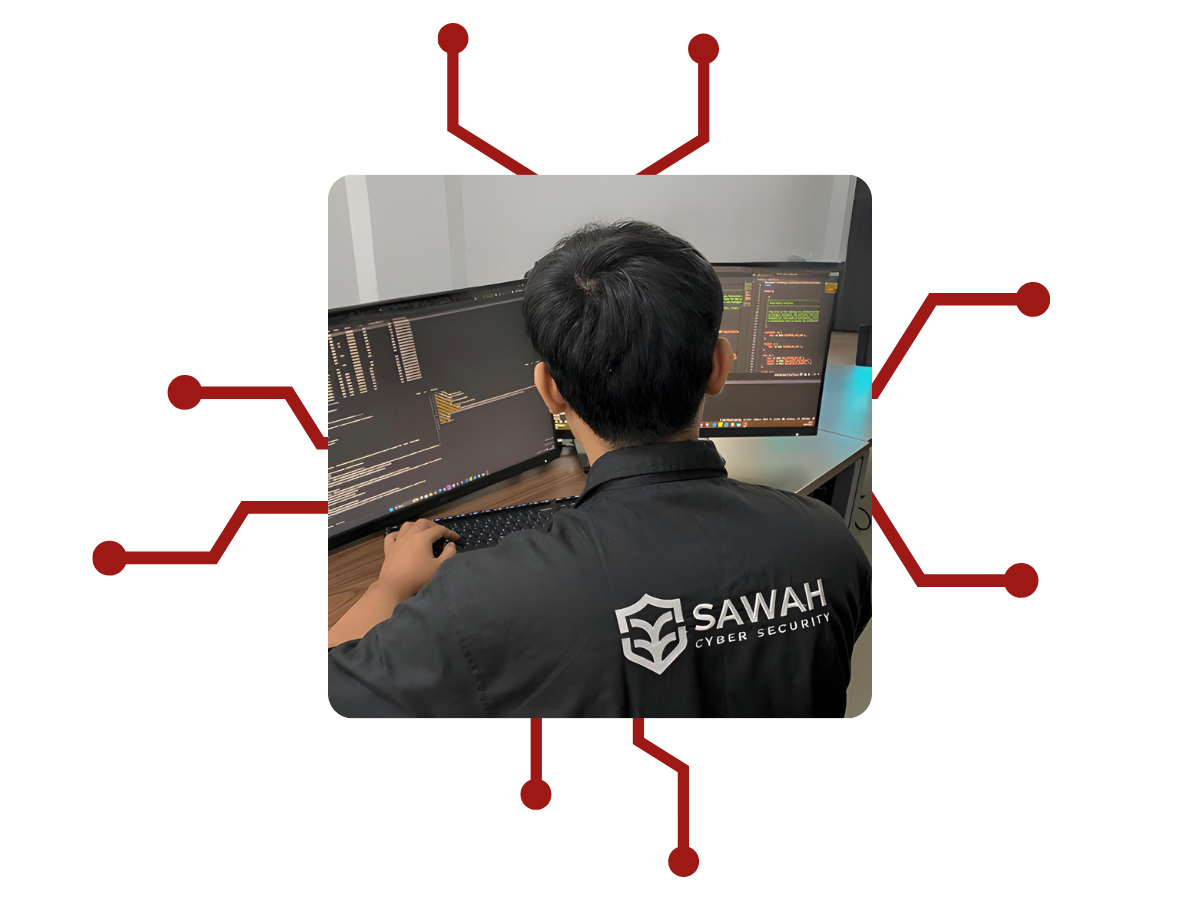
Our cybersecurity experts simulate real-world attacks to identify vulnerabilities and weaknesses that could lead to unauthorized access, data breaches, or other business impacts. The approach combines manual testing with automated testing to provide continuous insights into the application's security posture.
Request a PentestTechnical Security Assessment
A penetration test (or pentest) is a technical security assessment with the objective to identify vulnerabilities and weaknesses in an IT environment. A team of cyber security experts researches and exploits known and new vulnerabilities in information systems and operational IT systems, and assesses what risk those vulnerabilities pose to the confidentiality, integrity and availability of your information and operational systems.
Every pentest is scoped to the specific environment — no generic checklist. You receive a formal advisory, written for both executive and technical team, detailing each finding with its business impact, technical evidence, and the remediation path forward — so improvements can be prioritised, executed, and defended when needed. Our pentests follow established frameworks — PTES, NIST SP 800-115, OWASP — together with MIAUW, the Dutch methodology built for findings that hold up under audit. Good testing still depends on the tester: thinking creative and 'out-of-the-box', chaining weaknesses together, and finding what scanners miss.
Which Test Do You Need?
Three approaches, three different goals. Here is the short version — we help you pick the right one based on your situation, needs and budget.
| What you get | Vulnerability Assessment | Penetration Testing | Continuous Pentesting |
|---|---|---|---|
| Goal | Find and prioritize known vulnerabilities. | Objective-based: simulate real attacks and exploit weaknesses. | Continuous validation and retesting, in close collaboration with your IT and cyber security team. |
| Depth | Broad scan, limited exploitation. | Deep, manual, adversary-style. | Manual and AI-assisted, throughout the SDLC cycle. |
| When | Routine checks and compliance. | Before go-live or after big changes. | Agile / fast-release environments. |
| Best for | Baseline hygiene and audit prep. | Any company with critical systems, data or operations it cannot afford to see breached. | SaaS, product teams, regulated fast movers. |
| Company profile | Any company that wants a first look at known weaknesses across its environment. | Companies with specific systems they want probed for exploitable weaknesses under realistic attack conditions. | Companies shipping often — security testing that moves at the same pace as development. |
Attack Surface Management + Continuous Pentesting
The strongest combination we offer: ASM maps and watches everything you expose to the internet on an automated, continuous basis, while our pentesters bring the creative, out-of-the-box thinking that tools cannot. Automation for coverage, humans for depth — together, that is how you stay ahead of real attackers. And it is how you actually protect yourself against the AI-based threats we see today.
Explore ASM + CPTPractical Questions
The questions buyers usually ask before an engagement. Plain answers, no sales talk.
How is the scope for a pentest determined?
We combine a short intake call with a structured discovery questionnaire. The questionnaire captures the technical details — applications, environments, network ranges, user roles, tech stack, out-of-bounds systems — and the call aligns on goals, constraints and expectations. Everything is documented in writing before work starts, so there are no surprises on either side.
What is the turnaround time?
Most engagements are delivered within 1 to 2 weeks, depending on project requirements. A single web application is typically 1 week; a larger environment with multiple applications or internal infrastructure takes closer to 2 weeks. The report follows shortly after testing ends.
Who runs the pentest?
Our team is a mix of experienced penetration testers, bug bounty hunters and cyber security professionals — with industry certifications and hands-on offensive security experience across Europe, Indonesia and Japan. Every engagement goes through internal peer review before the report is delivered, so you get consistent output regardless of who runs the test.
How does pricing work?
Pricing is based on scope: the systems in play, the depth of testing, the effort required to do it properly, and any extra project requirements — legal obligations, regulatory or compliance frameworks, whether international standards (ISO 27001, PCI DSS, OWASP, NIST, etc.) need to be followed in the testing approach and reporting, specific expertise required for niche technologies, or projects that need extra tooling, licenses or dedicated infrastructure. We work with companies of different sizes across Indonesia, so budget is openly part of the scoping conversation — we will help you shape an engagement that delivers real security value within what makes sense for your organisation. Every quote is documented in writing before work starts, with no hidden costs.
What do I receive after the test?
A written report with an executive summary for management and a detailed technical section for your engineering team. Each finding includes the impact, reproduction steps, affected components, and concrete remediation advice. Findings are prioritised using risk-based scoring — not just a number, but the actual business impact in context.
Ready to Secure Your Applications?
Contact us to discuss how our penetration testing services can identify and eliminate vulnerabilities before attackers exploit them.
Request a Pentest